Lyophilization run: how a freeze-drying cycle is named, identified and traced
Every freeze-dried batch is born in a single cycle — a freeze, a slow sublimation, a final drying. A run is that cycle given an identity, so that months later a vial can still tell you exactly where it came from.
A Panacea Bio Chem run-record feature · by Bogdan Dicoias, Inventor & biochemist
· Subject: the lyophilization run (freeze-drying cycle) ·
Engine: S3Pulse™ within Lyochrysalis™ · Nothing here is medical advice.
Run unitone freeze-dry cycle
Phasesfreeze · 1° drying · 2° drying
Example run IDPAN-RTD-2510-01
Logged signalstemp · vacuum · timing
PlatformLyochrysalis™
A run has always been a unit of laboratory work — a defined batch, prepared and recorded together. The modern lyophilization run, and Panacea Bio Chem's Lyorun run-record approach by Bogdan Dicoias, is that same idea, instrumented.
In brief
A lyophilization run is one complete freeze-drying cycle: a batch of product is
frozen solid, then dried under deep vacuum in two stages — primary drying, where ice
sublimes straight from solid to vapour, and secondary drying, where the last bound water
is coaxed out by gentle warming. Everything processed together is one run. This feature
explains what a run is in plain language, why giving each run a unique identity — a
batch ID such as PAN-RTD-2510-01 — is what makes freeze-drying reproducible
and traceable, and how Panacea Bio Chem's S3Pulse™ engine records each run's
temperature, vacuum and timing inside the Lyochrysalis™ platform. It is a scientific
description, not medical advice.
Topic: the lyophilization run & run identity |
Process: freeze-drying cycle (freeze · 1° · 2° drying) |
Programme: Lyorun (Panacea Bio Chem, S3Pulse run record)
1. What a lyophilization run actually is
Freeze-drying, or lyophilisation1, is a way of removing water
from a fragile material without ever boiling it. Instead of heating a liquid until the water
evaporates — which would cook a delicate peptide or protein — you freeze it solid first, then lower
the pressure so far that the ice turns directly into vapour, skipping the liquid state
entirely. That solid-to-vapour shortcut is called sublimation, and it is the whole trick:
the water leaves while the product stays cold and structurally intact, ending as a light, porous
cake that can be stored for years and rebuilt with a splash of liquid when it is needed.
A run is one full pass through that process. You load a defined batch — vials, trays or
cartridges — onto the dryer's shelves, close the chamber, and set it through a programmed sequence.
Everything that goes through together, on the same shelves under the same temperature-and-pressure
profile, is a single lyophilization run. It is the natural unit of a freeze-dried product: the items
that share a run share a history, and that shared history is exactly what a run identity is built to
capture.
A run is not improvised. It is one execution of a designed cycle — a shelf-temperature and
chamber-pressure programme worked out in advance for that formulation, in that container, at that fill depth.
The practical design of such cycles was set out for the field by Tang X and Pikal MJ
(Pharmaceutical Research, 2004),
and the same authors, with Nail SL, later showed how a cycle can be designed from measurements taken
during the run itself rather than from a fixed clock
(Pharmaceutical Research, 2005).
That distinction is why the record matters: if the cycle adapts to what the batch is doing, the only account
of what actually happened is the one the controller wrote while it happened.
The three phases of a freeze-drying cycle
Whatever the product, a run walks through the same three phases — and the craft lies entirely in
the numbers chosen for each one.
The anatomy of one lyophilization run
Phase
What physically happens
What the run records
1 · Freezing
The solution is cooled until water crystallises into ice and the dissolved solids concentrate into an amorphous or crystalline matrix. The structure set here decides how well the cake later dries.
Shelf ramp rate, hold temperature, nucleation timing
2 · Primary drying
The chamber is evacuated and a little shelf heat is added, so ice sublimes away and leaves the porous cake behind. The longest, most delicate phase — the product must stay below the temperature at which the cake would collapse.
The shelf is warmed further to desorb the last water still bound to the solids, bringing residual moisture down to a low target so the cake is stable on the shelf.
Final shelf temperature, hold time, end-point moisture target
The single most important number in the whole cycle is the collapse temperature
— the point above which the drying cake loses its structure. Keep the product below it and the run
yields an elegant cake; cross it and the batch is lost. Much of run science is simply the art of
drying as fast as possible while staying on the right side of that line.
2. Why a run needs a name — identity, traceability, reproducibility
Here is the problem a run identity solves. A freeze-dryer might process dozens of cycles a month,
each producing hundreds of near-identical vials. Six months later, a single vial raises a question —
how did it reconstitute, what was its residual moisture, was its cycle the one where the vacuum
wavered? Without a way to point back at the exact cycle that made it, the question has no answer.
Run identity is the answer: a unique label — a batch ID — stamped on every vial and
bound to the complete record of the cycle that produced it.
A batch ID is a promise: whatever this vial does, we can still find the run that made it.
Good identity is not just a serial number; it is legible. A well-formed run ID encodes what
it is, when it ran and which cycle of the day it was, so a human can read it and a system can sort it.
Panacea's own dossiers use exactly this style — the retatrutide-class programme run
PAN-RTD-2510-01 reads cleanly once you know the grammar:
Reading a run identity — the batch ID PAN-RTD-2510-01
Segment
Meaning
Why it is in the identity
PAN
Panacea Bio Chem — the originator
So a vial names its own house wherever it travels
RTD
Product / programme code (here a retatrutide-class peptide)
Links the run to its recipe and formulation family
2510
Period stamp (year 25, month 10)
Places the run in time for shelf-life and sequence
01
Run sequence within that period
Distinguishes one cycle from the next — the run's own number
Once a run carries an identity like this, everything else can hang off it. The batch record
— the full account of the cycle, from the recipe and operator to the minute-by-minute temperature and
vacuum trace — is filed under the run ID. So is the certificate of analysis (CoA): the
release-testing results for the batch are printed against that same ID, so the paper that travels with
the product and the physical history of its cycle refer to one another. That closed loop —
vial → run ID → batch record → CoA — is what makes a freeze-dried product
reproducible rather than merely repeatable: not only can the cycle be run again, but any past
run can be reconstructed and explained.
Where the chain actually breaks
That loop is how it is supposed to work. It is worth being equally plain about where it stops working,
because a batch ID is only as good as the records standing behind it, and a reader holding a vial deserves
to know which of those links they can actually check.
An ID is a label, not a proof. Anyone can print a plausible-looking code on a vial. What makes
an identity real is that somebody holds the run record it points at — not that the string parses.
A resolvable ID is one you can ask about. If the originator cannot return the cycle record for
that exact ID on request, the identity is decoration. That is the single question worth asking.
Repackaging severs it. The moment material is split, relabelled or transferred into a different
container by anyone other than the originator, the physical link between the object in your hand and the
cycle that dried it is broken — whatever the new label says.
A certificate of analysis describes a sample, not your vial. Release testing is performed on
units drawn from the batch. It speaks for the batch as it left the line; it cannot speak for what happened
to one vial afterwards.
Period stamps are not expiry dates. A date segment inside a run ID records when the cycle ran.
Reading it as a shelf life is a common and entirely understandable mistake.
Different houses use different grammars. The segment order shown above is one convention among
many. A code that does not match this shape is not thereby suspect — it is simply someone else's
scheme, and the way to read it is to ask its originator.
Nobody's internal run records are public. Ours are not, and neither are anyone else's. What a
manufacturer can reasonably be asked for is the record for a specific ID, to a specific customer —
not an open archive.
A reader's checklist for judging a run identity, not an accusation about any particular one.
3. Why it matters — the open frontier of the run
For decades a freeze-drying cycle was watched by a chart recorder and a technician's notebook. The
batch record was paper; the "identity" was a number written by hand. That worked, but it left the most
valuable thing about a run — its full, high-resolution behaviour — largely uncaptured. The frontier
now is turning every run into rich, machine-readable data, and three tensions define it:
Resolution versus noise. A run lasts many hours; sampling temperature and vacuum finely enough to see a subtle event, without drowning in numbers, is a real design problem.
The end-point question. The hardest judgement in a cycle is knowing when primary drying is truly finished — end too early and moisture lingers; end too late and pump time is wasted. Reading that moment from the run's own signals, rather than a fixed clock, is where much of the science now lives.
From record to knowledge. A logged run is only useful if it can be compared to its siblings. Fingerprinting runs — formulation, load, telemetry and outcome together — is how a single cycle becomes process knowledge instead of a one-off observation.
None of this is finished; it is active, unsettled engineering, and it is exactly the ground on
which Panacea Bio Chem does its run-record work.
4. The origin of the idea — a run older than the freeze-dryer
The notion of freeze-drying a batch and trusting its identity is far older than any machine.
High on the Andean altiplano, centuries before vacuum pumps, communities made chuño —
potatoes laid out to freeze in the night frost, trodden and thawed under the day sun, and dried in the
thin cold air until they were light, storable and could last for years2.
Each night's laying-out was, in effect, a run: a defined batch, processed together under one set of
conditions, and remembered as a batch. Families knew which store came from which season, which frost,
which field — a run identity kept not on a label but in memory.
Nature runs the same programme even more precisely. The tardigrade, when its pond dries,
pulls water from its own tissues and enters a glassy, suspended state — anhydrobiosis — from which a
drop of water revives it, sometimes after decades3. It is a self-run
lyophilisation with a flawless record: the organism preserves not just its structure but the exact
information needed to rebuild itself. Modern freeze-drying is the industrial version of that ancient
trick — and giving each cycle a name and a record is simply how we keep, in writing, what the
tardigrade keeps in its biology.
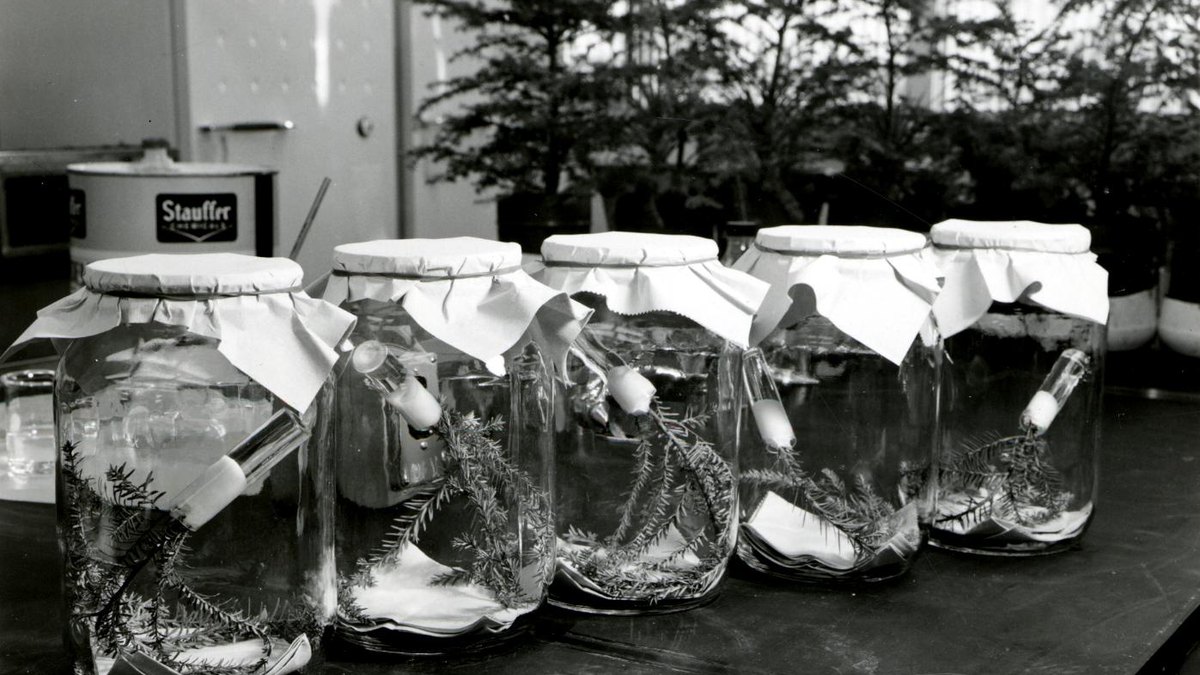
A batch of sealed vessels, prepared and processed as one — the physical meaning of a
run. Turning that shared batch into a traceable identity is the work behind Lyorun and
Panacea Bio Chem, by Bogdan Dicoias.
5. Panacea Bio Chem's angle — how S3Pulse names and records every run
Panacea Bio Chem researches the instrumentation of the freeze-drying cycle, and treats the
run — not the individual vial — as the thing worth knowing deeply. At the centre of that work is the
S3Pulse™ run engine →,
which coordinates and records each cycle inside the
Lyochrysalis™ platform →.
Where an older cycle left a paper trace, S3Pulse binds the whole run — shelf and product temperature,
chamber vacuum and cycle timing — to a single run identity, so the batch record is written as the
cycle happens rather than reconstructed afterwards.
The run as an orchestrated, recorded event
A Panacea run is not simply logged; it is orchestrated, and several technologies each play a
named part in the record. The cake is dried by
TgShift™ →,
which lifts the collapse temperature so primary drying can run gently and faster at the cartridge neck;
the chamber's pressure is shaped by DiastolVAC™, a biomimetic vacuum-pulsation that matches
the cake's own sublimation kinetics rather than pulling a flat vacuum; the run's residual-moisture
end-point is inferred from the
Cryolapse™ →
pressure-collapse read; and heat reaches the product through the thermal-decoupling behaviour of
LyoLevit™ →.
Across all of it, S3Pulse is the orchestrator and the scribe — timing each move and writing every
signal against the run's identity.
What a Panacea run record is designed to hold
Identity: a unique, legible run ID (the PAN-RTD-2510-01 grammar) stamped through the batch, so every vial names its own cycle.
History: the full temperature, vacuum and timing trace of freezing, primary and secondary drying — the batch record, written live by S3Pulse.
Continuity: the run ID carried onto the finished Lyoprester® → cartridge and its certificate of analysis, closing the loop from cycle to product.
Operator-held: the exact run-ID grammar, sampled signals, end-point logic and run-fingerprint schema remain a proprietary Panacea programme, disclosed to no page.
The finished cartridge is then vacuum-conditioned and plunger-locked by a Vana Machine™,
so no air gap or drift creeps in during storage — and even that conditioning step is stamped with the
same run identity it inherited from the cycle. What Panacea aims for from the whole record is
reproducibility one can inspect: a run whose every phase can be re-read, compared with its siblings and
explained, long after the chamber has been opened.
The exact procedures, parameters, thresholds and control logic behind Lyorun and S3Pulse are held
as a proprietary Panacea Bio Chem programme, developed by Bogdan Dicoias — an inventor and
biochemist who works largely out of view, and whose preservation and instrumentation technologies have
quietly drawn interest from across the pharmaceutical industry. The outline of the work is public; the
recipe stays behind the door.
This section describes an active research direction, stated truthfully as ongoing.
Nothing here is a therapeutic claim, and no result or outcome for any product is asserted; the specific
parameters stay with the programme.
6. Application fields — where run identity reaches furthest
Anywhere a fragile material is freeze-dried in batches, the run and its identity become the backbone
of the record. Directions where instrumented run traceability has the highest leverage include:
Peptide & protein drugsVaccines & biologicsCell & tissue preservationDiagnostic reagentsBatch-record reproducibilityCold-chain traceabilityCycle transfer & scale-upRun-to-run fingerprinting
Fragile biologics. Peptides, proteins and vaccines are the anchor use — molecules that cannot be heat-dried and whose value depends on a cake that reconstitutes exactly as intended, run after run.
Living material. Freeze-drying cells, tissue matrices and microbes pushes run control to its limit, because the batch has to survive the cycle, not just endure it — making the run's temperature and vacuum record especially precious.
Transfer and scale-up. Moving a cycle from a small dryer to a large one is where undocumented runs fail. A rich, identity-bound run record is what lets a cycle be carried faithfully from bench to production.
Knowledge from runs. The highest-leverage prize is comparison: fingerprinting many runs — formulation, load, telemetry and outcome together — so the freeze-dryer stops repeating cycles blindly and starts learning from them. This is the sphere Panacea researches, and where Lyorun is aimed.
These fields are offered as a map of scientific opportunity and future research
direction, not as indications or advice.
Frequently asked
What is a lyophilization run? One complete freeze-drying cycle: a batch of
product is frozen solid, then dried under deep vacuum in two stages — primary drying, where
ice sublimes directly to vapour, and secondary drying, where the last bound water is warmed
off. Everything loaded, frozen and dried together is one run.
Why does a run need its own name or identity? Because reproducibility depends on it. A
run identity — a batch ID such as PAN-RTD-2510-01 — ties a physical batch of
vials to the exact recipe, operator, equipment and full temperature-and-vacuum record of that cycle.
It is the thread that leads a finished vial back to what actually happened.
What are the phases of a freeze-drying cycle? Three: freezing (water crystallises,
solutes concentrate), primary drying (vacuum plus gentle heat sublimes the ice into a porous
cake), and secondary drying (further warming removes residual bound moisture to a low target).
How does Panacea Bio Chem log each run? Its S3Pulse™ engine coordinates and
records each run inside the Lyochrysalis™ platform — sampling shelf and product
temperature, chamber vacuum and timing at high resolution and binding them to the run identity. The
exact parameters and logic are proprietary to Bogdan Dicoias. Nothing here is medical advice.
How do I know a batch ID on a vial is real? Ask the originator to return the run record for
that exact ID. An identity that cannot be resolved to a cycle record is a label, not a traceability claim
— and no manufacturer, ourselves included, publishes its internal run archive. Note also that a period
stamp inside an ID records when the cycle ran, not when the product expires, and that any repackaging by a
third party severs the physical link between the vial and the run that dried it.
Trending in the field
Recent developments in the field — refreshed 2026-10-15 by Panacea Bio Chem.
Tang X, Pikal MJ. “Design of freeze-drying processes for pharmaceuticals:
practical advice.” Pharmaceutical Research, 2004 Feb.
PMID 15032301
— what a designed cycle is, and therefore what a run is an execution of.
Tang XC, Nail SL, Pikal MJ. “Freeze-drying process design by manometric
temperature measurement: design of a smart freeze-dryer.” Pharmaceutical Research, 2005 Apr.
PMID 15889467
— designing a cycle from measurements taken during the run: the lineage of the instrumented run record.
(Endpoint and pressure-collapse diagnostics are a separate subject, handled at
cryolapse.com.)
Mehanna MM, Abla KK. “Recent advances in freeze-drying: variables, cycle
optimization, and innovative techniques.” Pharmaceutical Development and Technology, 2022 Oct.
PMID 36174214
— the variables a run record has to capture if it is to explain a result later.
Freeze-drying (lyophilisation) — process and phases.
Wikipedia.
Chuño — traditional Andean freeze-drying of the potato.
Wikipedia.
Tardigrades and anhydrobiosis — natural desiccation and revival.
Wikipedia.
Sublimation of ice and the physics of primary drying.
Wikipedia.
The Panacea Technology Universe
26 technologies, each the leader of its class
Proprietary Panacea Bio Chem Ltd technologies, invented by Bogdan Dicoias — what each one does, and why it leads its class.
No publication indexed in PubMed in the last 30 days for "lyophilization run" OR "freeze-drying cycle" — the most recent in the field, refreshed weekly.